
If someone told you to “fix your posture,” what would you do? Most people would immediately pull their shoulders back, lift their chest, and stand a little taller. And while that might look better in the mirror, it’s not the whole story. Good posture isn’t just about standing up straight or forcing your body into a rigid position. It’s about how your body moves, adapts, and functions throughout your entire day. Here in Columbia, MD, many patients at Living Wellness Chiropractic are surprised to learn that the posture advice they’ve been following for years might actually be working against them. In this article, we’ll explore what good posture really means from a chiropractic perspective, why it matters for your overall health, and how to develop postural habits that support your body naturally.
What is good posture? Good posture is the balanced alignment of your body that allows your musculoskeletal system to function efficiently with minimal strain. It involves proper positioning of your spine, pelvis, and joints during both static positions (like sitting or standing) and dynamic movement, supporting optimal nervous system function and reducing unnecessary stress on muscles, ligaments, and discs.
Table of Contents
- Why Posture Matters Beyond Appearances
- What Balanced Posture Actually Looks Like
- Common Posture Myths That Hold You Back
- How Modern Life Affects Your Posture
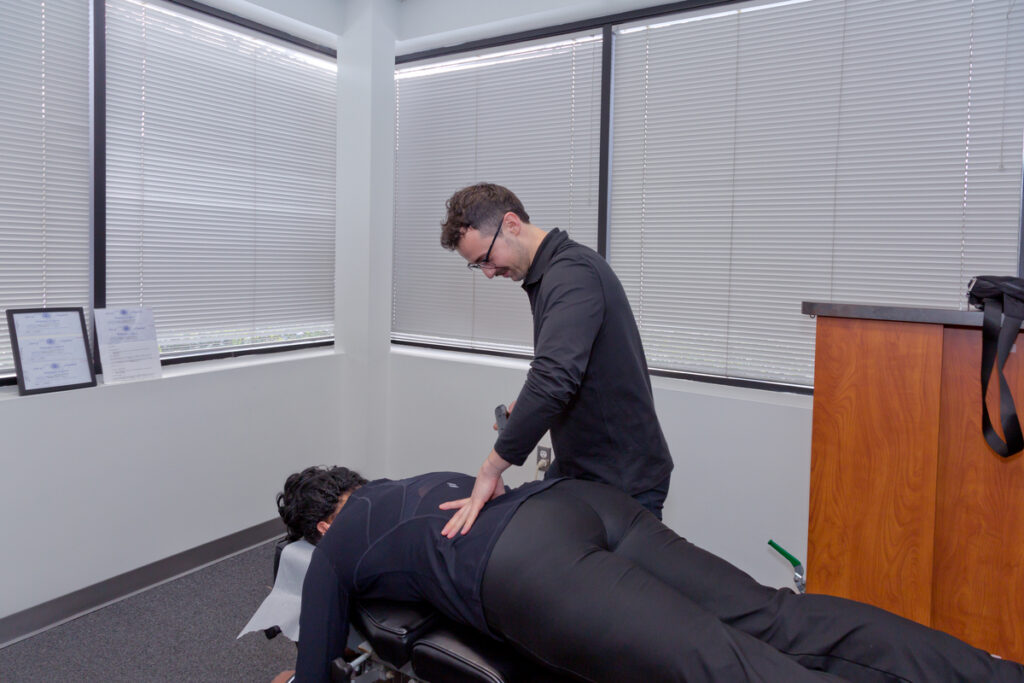
- How Chiropractic Care Supports Better Posture
- Practical Tips for Improving Your Posture
- When to See a Chiropractor About Posture
- Posture Approaches Compared
- Myths vs. Facts About Posture
- Final Thoughts
Why Posture Matters Beyond Appearances
When most people think about posture, they think about how they look. And yes, balanced posture does tend to make you appear more confident and energetic. But the real importance of posture goes much deeper than aesthetics. Your posture directly affects how your body distributes force, how your muscles work together, and how efficiently your nervous system communicates with the rest of your body.
Consider this: your head weighs about 10 to 12 pounds in a neutral position. For every inch your head moves forward from that neutral alignment, the effective weight on your neck and upper back increases dramatically. Research suggests that forward head posture can effectively double or even triple the stress on your cervical spine. That’s like carrying an extra bowling ball around all day.
But the effects don’t stop at your neck. Poor postural habits create compensations throughout your entire kinetic chain. When your head moves forward, your upper back often rounds to counterbalance. Your lower back may increase its curve to keep you upright. Your hips might tilt forward or backward. Your knees and feet adjust accordingly. The result is a body that’s working much harder than it needs to just to keep you standing or sitting.
Over time, these compensations lead to muscle imbalances. Some muscles become chronically tight and overworked, while others become weak and underused. This imbalance can contribute to discomfort, reduced range of motion, and increased wear and tear on your joints and discs. At Living Wellness Chiropractic in Columbia, MD, Dr. Marissa Jenney frequently explains to patients that addressing posture isn’t about perfection — it’s about reducing unnecessary strain and helping your body function the way it was designed to.
What Balanced Posture Actually Looks Like
Balanced posture isn’t a single rigid position. It’s a dynamic state where your body can move and adapt efficiently. From a biomechanical standpoint, good posture means your bones are stacked in a way that requires minimal muscular effort to maintain stability.
When standing, balanced posture generally includes your ears aligned over your shoulders, your shoulders over your hips, and your hips over your ankles. Your spine maintains its natural curves: a gentle forward curve in your neck (cervical lordosis), a gentle backward curve in your mid-back (thoracic kyphosis), and a gentle forward curve in your lower back (lumbar lordosis). These curves act like springs, helping absorb shock and distribute forces efficiently.
Your pelvis should be in a relatively neutral position — not excessively tilted forward or backward. Your shoulder blades should rest comfortably against your rib cage, not winging out or pulled up toward your ears. Your knees should be relaxed, not locked or hyperextended. Your weight should be distributed evenly through both feet.
But here’s the important part: this alignment should feel relatively effortless when your body is functioning well. If you have to strain or force yourself to maintain what you think is “good posture,” something is off. True postural balance comes from proper joint mobility, balanced muscle tone, and good body awareness. It’s not about rigidly holding yourself in position.
When sitting, similar principles apply. Your ears should be over your shoulders, your lower back should maintain a gentle curve, your hips and knees should be at comfortable right angles, and your feet should rest flat on the floor. Your screen or reading material should be at eye level, not forcing your head forward or down. But again, no position is perfect if held for too long. The human body is designed to move.
Common Posture Myths That Hold You Back
There’s a lot of well-intentioned but misleading advice about posture floating around. Let’s clear up some of the most common misconceptions that might actually be making your posture worse.
The “military posture” myth: Many people think good posture means standing at attention like a soldier — chest puffed out, shoulders pinned back, spine ramrod straight. This forced position actually flattens your spine’s natural curves and creates just as much tension as slouching does. It’s exhausting to maintain and doesn’t reflect how your body is meant to function.
The “one perfect position” myth: There’s no single perfect posture that works for everyone in every situation. Your body’s unique structure, your activities, and your environment all influence what balanced posture looks like for you. What matters more is variation and awareness — not finding one position and staying frozen there.
The “just sit up straight” myth: Simply telling someone to sit up straight doesn’t address the underlying joint restrictions, muscle imbalances, or body awareness issues that led to poor posture in the first place. Without addressing these root causes, any postural correction you force will be temporary and uncomfortable.
The “posture is all about core strength” myth: While core stability plays a role, good posture isn’t just about having strong abs. It requires balanced strength throughout your entire body, proper joint alignment, good flexibility, and nervous system coordination. Focusing only on core exercises while ignoring other factors rarely solves postural problems.

How Modern Life Affects Your Posture
Our modern lifestyle presents unique challenges to maintaining balanced posture. Many of these challenges didn’t exist for previous generations, and our bodies haven’t evolved quickly enough to adapt without consequence.
Screen time is the biggest culprit. Whether it’s working on a computer, scrolling on your phone, or binge-watching your favorite show, screens tend to pull your head and shoulders forward. The average American spends over seven hours per day looking at screens. That’s a lot of time with your head in a forward position, your shoulders rounded, and your upper back curved.
Prolonged sitting is another major factor. Humans didn’t evolve to sit in chairs for eight to twelve hours a day. When you sit for extended periods, especially in poorly designed chairs or at poorly set up workstations, several things happen. Your hip flexors shorten and tighten. Your glutes and core muscles essentially turn off. Your spinal discs experience more pressure than when you’re standing. Your circulation slows down. All of these contribute to postural compensation patterns.
Even our cars contribute to the problem. Most car seats position you in a reclined position with your head pushed forward. If you have a long commute in Columbia, MD or drive frequently for work, you’re spending significant time in a posture that encourages forward head position and rounded shoulders.
Stress and emotional factors also play a role that many people don’t consider. When you’re stressed, anxious, or fatigued, you tend to physically collapse inward. Your shoulders round, your chest caves, your head drops. This protective posture might feel natural in the moment, but when it becomes your default position, it creates the same mechanical problems as any other postural dysfunction.
How Chiropractic Care Supports Better Posture
Chiropractic care approaches posture from a different angle than most conventional methods. Rather than simply telling you to stand up straighter, chiropractors look at why your posture has become unbalanced in the first place. What joint restrictions are limiting your mobility? What muscle imbalances are pulling you out of alignment? How is your nervous system coordinating (or failing to coordinate) your postural muscles?
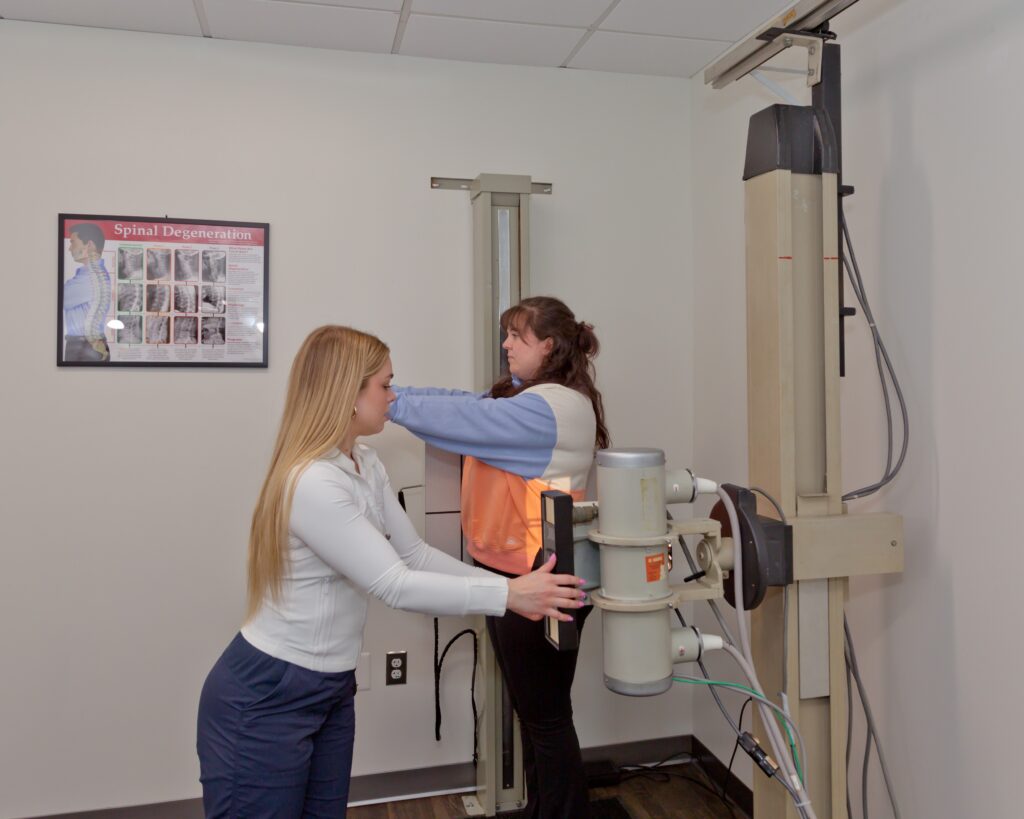
At Living Wellness Chiropractic, Dr. Marissa Jenney takes a comprehensive approach to posture-related concerns. Care typically begins with a thorough assessment of your spinal alignment, joint mobility, muscle balance, and movement patterns. This helps identify the specific factors contributing to your postural challenges.
Chiropractic adjustments help restore proper joint mobility, particularly in areas that have become restricted or misaligned. When your joints move properly, your nervous system can better coordinate the muscles that support your posture. You’re not forcing yourself into a position — you’re allowing your body to find balance more naturally.
Evidence indicates that chiropractic care can help improve postural awareness and reduce the discomfort associated with postural strain. A systematic review published in the Journal of Physical Therapy Science found that manual therapy approaches, including chiropractic care, showed positive effects on posture-related neck and back concerns when combined with exercise and postural education.
The goal isn’t to create a dependency on adjustments to maintain good posture. Rather, chiropractic care helps remove the barriers that prevent your body from self-correcting. Combined with specific exercises, ergonomic modifications, and improved body awareness, it supports your body’s natural ability to maintain balanced alignment.
Many patients at Living Wellness Chiropractic in Columbia, MD report that after receiving care, good posture starts to feel more natural and requires less conscious effort. That’s because their body is functioning better mechanically and neurologically, making it easier to maintain balance without constant vigilance.
Practical Tips for Improving Your Posture
While professional evaluation and care are valuable, there are also practical steps you can take daily to support better posture. These aren’t about forcing yourself into a rigid position, but rather about creating an environment and habits that make balanced posture easier and more natural.
Optimize your workspace: If you work at a computer, ensure your monitor is at eye level so you’re not looking down. Your keyboard and mouse should allow your elbows to rest at about 90 degrees. Your chair should support the natural curve of your lower back, and your feet should rest flat on the floor. Consider a standing desk or desk converter if sitting all day bothers you, but remember that standing all day isn’t the answer either — variation is key.
Set movement reminders: No posture is good posture if you hold it for hours without moving. Set a timer to remind yourself to stand up, walk around, or stretch every 30 to 45 minutes. Even standing up and sitting back down a few times helps reset your position and get blood flowing.
Bring your phone to you: Instead of looking down at your phone in your lap, bring it up to eye level. This simple change can significantly reduce the strain on your neck. When texting or reading on your phone, support your elbow with your other hand to make it easier to hold the phone higher.
Practice chin tucks: Gently draw your chin straight back, like you’re making a double chin, without tilting your head up or down. Hold for a few seconds, then relax. This exercise helps strengthen the deep neck flexors that support your head in proper alignment. Do 10 repetitions several times per day.
Strengthen your mid-back: Exercises that strengthen the muscles between your shoulder blades help counteract the forward-rounded position that comes from desk work and screen time. Simple exercises like rows, scapular squeezes, and wall angels can be very effective when done consistently.
Check in with your body: Throughout the day, take a moment to notice your position without judgment. Are your shoulders up by your ears? Is your head forward? Are you slumped or rigid? Simply noticing your patterns, without forcing a correction, helps build the body awareness that supports better posture naturally.
Improve your sleep setup: Your pillow should support your neck in a neutral position, not push your head too far forward or let it drop back too much. If you sleep on your side, your pillow should fill the space between your shoulder and head. If you sleep on your back, a lower pillow usually works better. Avoid sleeping on your stomach, which forces your neck into rotation for hours.
Stay active: Regular physical activity helps maintain the strength, flexibility, and body awareness that support good posture. Activities that involve varied movement patterns — like walking, swimming, yoga, or recreational sports — tend to be more beneficial than repetitive exercises that reinforce the same patterns over and over.
When to See a Chiropractor About Posture
How do you know when your posture concerns warrant professional evaluation? While everyone can benefit from improved postural awareness, certain signs suggest that you’d benefit from chiropractic assessment sooner rather than later.
Consider scheduling an evaluation if you notice persistent discomfort in your neck, upper back, or shoulders that seems related to your daily activities. If you feel stiff or achy after sitting at your desk, driving, or looking at screens for extended periods, that’s your body telling you something isn’t working efficiently.
Frequent headaches, especially those that start at the base of your skull or in your temples, can be related to postural strain. If you notice these headaches worsen as the day goes on or after periods of concentration, posture may be a contributing factor.
Visible postural changes that have developed or worsened over time also warrant attention. This might include a noticeably rounded upper back, a forward head position that’s become more pronounced, uneven shoulders, or one hip appearing higher than the other.
If you’ve tried making postural improvements on your own but find it difficult or uncomfortable to maintain better alignment, that often indicates underlying restrictions or imbalances that need to be addressed. Fighting against your body’s current patterns without addressing the root cause rarely leads to lasting improvement.
Numbness, tingling, or radiating sensations in your arms or hands can sometimes be related to nerve irritation from postural stress, particularly forward head posture and rounded shoulders. While these symptoms can have various causes, they should always be evaluated professionally.
At Living Wellness Chiropractic in Columbia, MD, patients can receive a thorough postural assessment that identifies specific areas of concern and develops an individualized plan to address them. The earlier you address postural dysfunction, the easier it typically is to correct.

Posture Approaches Compared
| Approach | Focus | Strengths | Limitations |
|---|---|---|---|
| “Just Stand Up Straight” Method | Conscious effort to hold rigid position | Immediately visible; no equipment needed | Exhausting to maintain; doesn’t address underlying causes; often creates new tension patterns |
| Exercise-Only Approach | Strengthening specific muscle groups | Builds strength and endurance; empowering | May not address joint restrictions or neurological coordination; results can be slow without other interventions |
| Ergonomic Modifications Alone | Optimizing workspace and environment | Reduces external strain factors; practical | Doesn’t correct existing imbalances or restrictions; limited benefit if body can’t adapt to improved setup |
| Comprehensive Chiropractic Approach | Addressing joint mobility, muscle balance, nervous system function, and habits | Addresses root causes; combines multiple strategies; supports natural self-correction | Requires professional evaluation; benefits develop over time with consistency |
Myths vs. Facts About Posture
Myth: There’s One Perfect Posture Everyone Should Aim For
Fact: Optimal posture varies based on your individual body structure, flexibility, strength, and activities. What matters most is balanced alignment that allows efficient movement with minimal strain. The “perfect” posture for you may look different from someone else’s ideal alignment.
Myth: Good Posture Should Feel Natural Immediately
Fact: If you’ve had postural imbalances for years, better alignment may actually feel strange at first. Your body has adapted to your current patterns, and muscles have developed habits. As your body relearns balanced patterns through chiropractic care and exercises, improved posture will gradually feel more natural.
Myth: Posture Only Matters When You Have Pain
Fact: Poor posture creates mechanical stress even before you feel discomfort. By the time pain appears, compensations and imbalances are often well-established. Addressing posture proactively helps prevent problems before they develop, making it easier to maintain long-term spinal health.
Myth: You Can Fix Posture in a Few Days
Fact: Your current posture developed over months or years as your body adapted to your habits and environment. While you may notice improvements relatively quickly with appropriate care, lasting postural changes require time for tissues to remodel, muscles to rebalance, and new movement patterns to become automatic. Consistency matters more than speed.
Myth: Chiropractic Adjustments Are Just About Cracking Your Back
Fact: Chiropractic adjustments restore proper joint mobility, which affects how your nervous system coordinates the muscles that control your posture. The adjustment itself is one component of comprehensive care that may also include soft tissue work, exercises, and lifestyle modifications — all working together to support better posture.
Final Thoughts
Good posture isn’t about standing at attention or forcing yourself into a rigid position that looks good but feels uncomfortable. It’s about creating balance in your body so that maintaining healthy alignment becomes natural and effortless. It’s about reducing unnecessary strain on your muscles, joints, and nervous system so your body can function the way it was designed to.
Here in Columbia, MD, many patients come to Living Wellness Chiropractic frustrated with traditional “stand up straight” advice that hasn’t worked for them. They’re often relieved to learn that there’s a more comprehensive approach — one that addresses the underlying restrictions, imbalances, and habits that make good posture difficult in the first place.
Whether you’re dealing with neck discomfort from desk work, upper back tension from screen time, or simply want to move through your day with more ease and less fatigue, understanding what posture really means is the first step. The human body is remarkably adaptable and capable of positive change when given the right support.
If you’re struggling with posture-related concerns or simply want to optimize how your body functions, Dr. Marissa Jenney and the team at Living Wellness Chiropractic are here to help. Through thorough assessment, individualized care, and practical education, we support patients in developing the balanced, efficient posture that allows them to feel their best. Your body doesn’t need to be forced into perfection — it needs the opportunity to find its natural balance.
FAQ
How long does it take to improve posture?
The timeline varies based on how long you’ve had postural imbalances, your consistency with recommended exercises and habits, and whether underlying restrictions are being addressed. Many people notice some improvements within a few weeks, but lasting postural changes typically develop over several months as tissues remodel and new patterns become habitual.
Can poor posture cause headaches?
Yes, postural stress — particularly forward head posture and upper back rounding — can contribute to tension-type headaches and cervicogenic headaches that originate from the neck. When your head is positioned forward, the muscles at the base of your skull and in your upper neck work much harder, which can trigger headache patterns. Addressing the underlying postural dysfunction often helps reduce headache frequency and intensity.
Is it better to stand or sit at work?
Neither standing nor sitting all day is ideal — the human body thrives on variety and movement. If possible, alternate between sitting and standing throughout your workday, and take regular movement breaks regardless of whether you’re sitting or standing. When you do sit or stand, focus on balanced alignment rather than holding one rigid position.
Do posture corrector braces work?
Posture braces may provide temporary reminders to adjust your position, but they don’t address the underlying joint restrictions, muscle imbalances, or movement patterns that created poor posture in the first place. Long-term use can actually weaken postural muscles since the brace does the work for them. A better approach addresses the root causes so your body can support itself naturally.
Why does good posture feel uncomfortable at first?
Your muscles, joints, and nervous system have adapted to your current postural patterns. When you change those patterns, even for the better, different muscles are activated and stretched in unfamiliar ways. This temporarily feels “wrong” because it’s not what your body is used to. As your body adapts through appropriate care and consistent practice, improved posture becomes more comfortable.
Can chiropractic care help with forward head posture?
Yes, chiropractic care can be very helpful for forward head posture by addressing restricted joints in the neck and upper back, reducing muscle tension, and improving nervous system coordination of postural muscles. Combined with specific exercises and ergonomic modifications, chiropractic adjustments help your body maintain better head and neck alignment more naturally. Dr. Marissa Jenney frequently works with patients at Living Wellness Chiropractic to address forward head posture through comprehensive, individualized care plans.
TL;DR — Key Takeaways
- Good posture isn’t about rigidly standing up straight — it’s about balanced alignment that allows your body to function efficiently with minimal strain on muscles, joints, and your nervous system.
- Modern lifestyle factors like prolonged screen time, extended sitting, and stress create unique postural challenges that require more than just conscious effort to correct.
- Lasting postural improvement requires addressing underlying joint restrictions, muscle imbalances, and movement patterns — not just forcing yourself into a “correct” position.
- Chiropractic care at Living Wellness Chiropractic in Columbia, MD helps restore joint mobility and nervous system coordination, making it easier for your body to maintain balanced posture naturally.
- Combining professional care with practical strategies like ergonomic optimization, regular movement breaks, and specific exercises creates the best environment for sustainable postural improvement.