
Leg pain is one of those symptoms that can mean a hundred different things — and yet, the way it feels often tells us more than people realize. Whether you’re dealing with a sudden, electric jolt that runs down the back of your leg or a persistent, heavy ache that just won’t let up, the character of your pain is actually one of the most important clues we have when figuring out what’s going on. Here at Living Wellness Chiropractic in Columbia, MD, Dr. Marissa Jenney and Dr. Connor Reed hear patients describe leg pain in all kinds of ways — and that description always matters. Understanding the difference between sharp, shooting leg pain and a dull, lingering ache can help you get the right care faster and feel less anxious about what your body is trying to tell you.
What Is the Difference Between Sharp, Shooting Leg Pain and a Dull Ache?
Sharp, shooting leg pain typically signals nerve involvement — pain that originates in the spine or a compressed nerve and travels down the leg along a specific pathway. A dull ache, on the other hand, is more commonly associated with muscle tension, joint stress, or soft tissue fatigue. Both types of pain are real, both deserve attention, and both can often be addressed through conservative chiropractic care.
What Sharp, Shooting Leg Pain Usually Means
When patients describe pain that feels like an electric shock, a burning streak, or a bolt of lightning running from the lower back through the buttock and down into the calf or foot, there’s a good chance a nerve is involved. This type of pain tends to follow a specific route — because nerves themselves follow very specific anatomical pathways through the body.
The most well-known cause of this kind of pain is sciatica. The sciatic nerve is the longest nerve in the body, running from the lower lumbar spine, through the buttocks, and all the way down each leg. When something compresses or irritates this nerve — whether it’s a herniated disc, a misaligned vertebra, or tight muscles in the piriformis area — the pain can radiate (or “refer”) along its entire length. Some people feel it mostly in the hip. Others feel it down the back of the thigh and into the foot. The location and pattern give chiropractors like Dr. Marissa Jenney and Dr. Connor Reed important diagnostic information.
Other conditions that can cause sharp, shooting leg pain include lumbar disc herniation, spinal stenosis (a narrowing of the spinal canal), and nerve root irritation from vertebral misalignment, sometimes called a subluxation in chiropractic terminology. These are all conditions where the nerve itself is being affected — either compressed, inflamed, or stretched — which creates that characteristic sharp, radiating quality that many patients find alarming.
It’s worth noting that sharp, shooting pain doesn’t always mean something catastrophic is happening. Many people in the Columbia, MD area come into Living Wellness Chiropractic worried that their leg pain means surgery is inevitable, when in fact conservative care is often highly appropriate for nerve-related leg pain. Research published in journals like Spine and recognized by organizations like the American College of Physicians suggests that non-invasive approaches are often a reasonable first step for this type of pain.
What a Dull, Persistent Ache Usually Means
A dull, heavy, or constant aching in the leg tends to point toward different structures — muscles, joints, tendons, or blood vessels — rather than a specific nerve being compressed. This type of pain often feels more diffuse, meaning it’s harder to point to one exact spot. It might feel like fatigue in the muscles, a deep throbbing, or the sensation of the leg feeling “heavy” even when you’re just sitting still.
Muscular causes are extremely common. Overuse, poor posture, prolonged sitting (which is a reality for many people working desk jobs throughout Columbia, MD and the surrounding Howard County area), and compensatory movement patterns can all lead to muscles that are chronically tight, inflamed, or simply exhausted. The hamstrings, hip flexors, and calf muscles are frequent offenders.
Joint-related causes are also worth considering. Hip joint dysfunction, sacroiliac joint irritation, and even referred pain from lumbar facet joints can all produce a deep, aching quality in the leg and thigh that doesn’t follow a clean nerve pathway. This type of referred pain from joints is a well-documented phenomenon in musculoskeletal medicine and is something that both Dr. Jenney and Dr. Reed evaluate carefully during a chiropractic examination.
Circulatory issues, such as poor venous return in the lower extremities, can also cause a heavy, aching sensation — particularly after long periods of standing or sitting. While this category falls outside the chiropractic scope of practice to treat directly, chiropractors are trained to recognize when a referral to another provider is the most appropriate course of action.
Common Causes of Leg Pain in Both Categories
Understanding the root cause of leg pain — rather than just the symptom — is essential to getting lasting relief. At Living Wellness Chiropractic, the approach is always to look upstream. Leg pain, whether sharp or dull, is rarely just a “leg problem.” It usually connects back to what’s happening in the lumbar spine, the pelvis, or the hip joint.
Some of the most common structural causes we see in our Columbia community include lumbar disc bulges or herniations, which can compress nerve roots and cause radiating leg pain. Degenerative changes in the lumbar spine can narrow the spaces where nerves exit, producing both sharp and achy symptoms depending on the degree of compression. Sacroiliac joint dysfunction — where the joint connecting the pelvis to the base of the spine becomes restricted or inflamed — is another frequently overlooked cause of leg and buttock pain that mimics sciatica.
Piriformis syndrome is another condition worth mentioning. The piriformis is a small muscle deep in the buttock that, when tight or spasmed, can directly compress the sciatic nerve. This can produce a pattern of symptoms very similar to true disc-related sciatica. The distinction matters because the treatment approach differs somewhat — and this is exactly the kind of differentiation that a trained chiropractor brings to the table.
How Chiropractic Care Fits Into Leg Pain Relief
Chiropractic care offers a non-surgical, drug-free approach to addressing many of the underlying causes of both sharp, shooting leg pain and persistent dull aches. Rather than masking the symptom, the goal is to identify and address the mechanical dysfunction contributing to the pain in the first place.
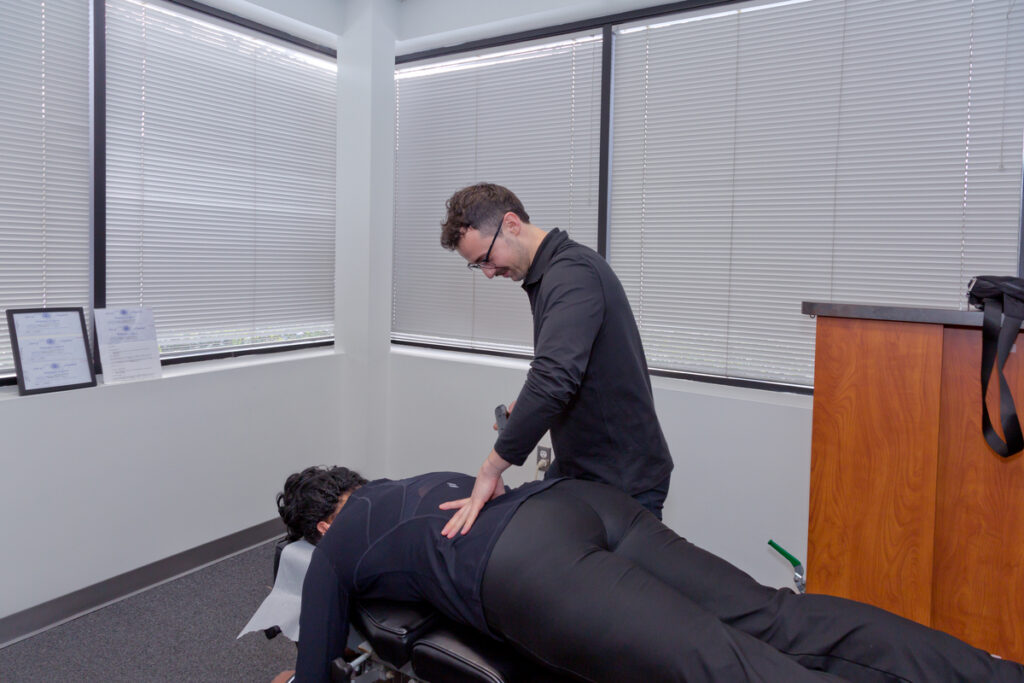
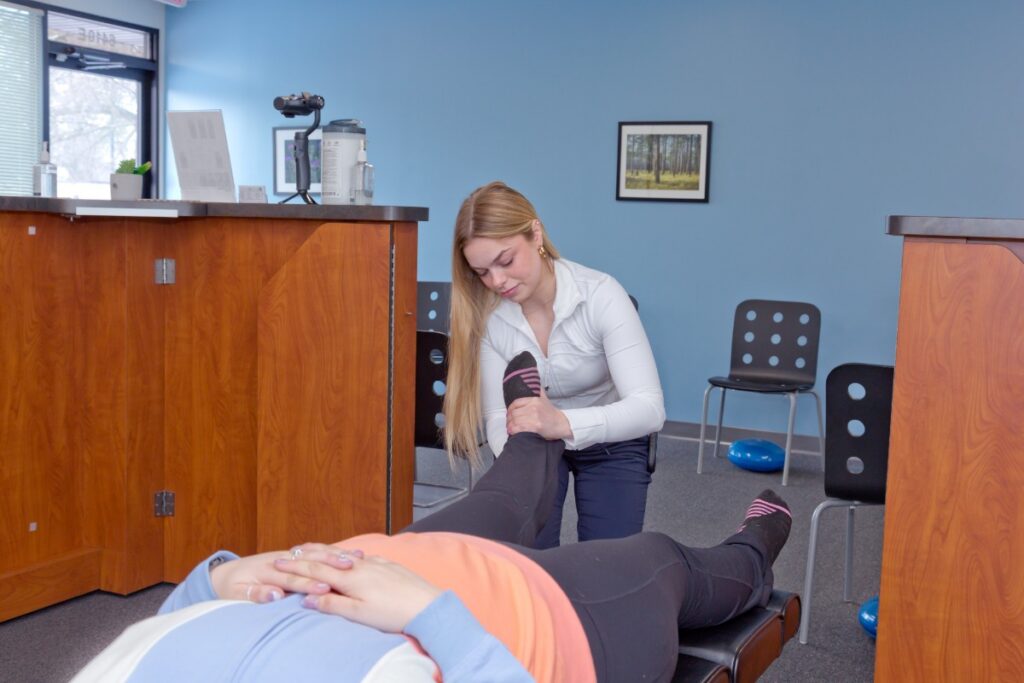
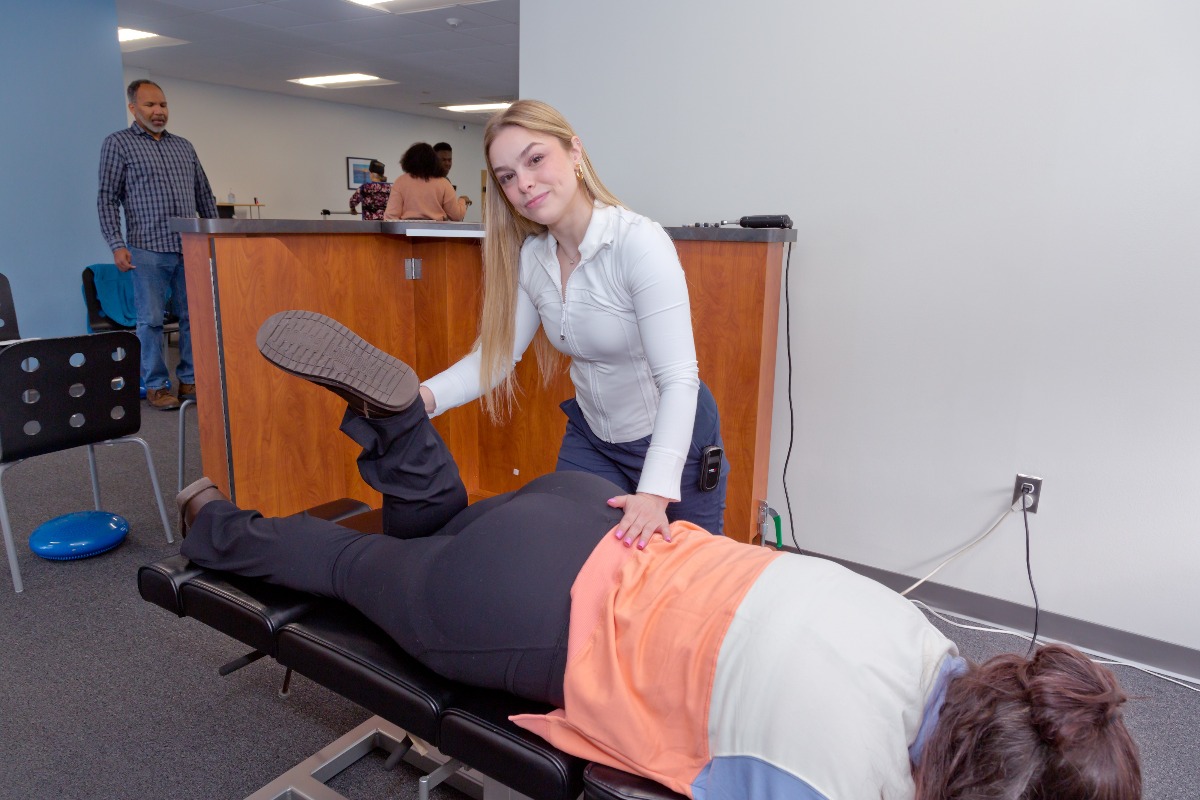
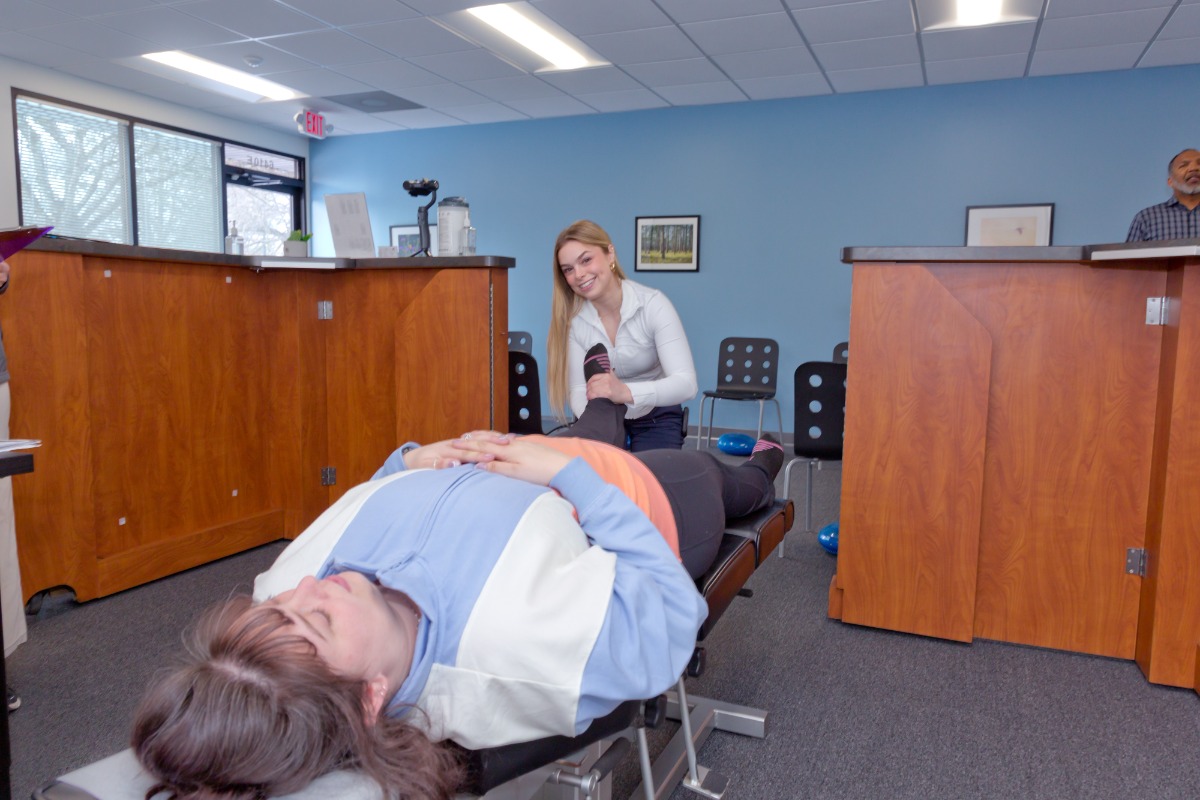
At Living Wellness Chiropractic in Columbia, MD, Dr. Marissa Jenney and Dr. Connor Reed begin with a thorough evaluation — reviewing your history, assessing your posture and movement patterns, and performing orthopedic and neurological tests to help identify where the problem is originating. This isn’t a one-size-fits-all approach. Every patient’s experience of leg pain is unique, and the care plan should reflect that.
Chiropractic adjustments to the lumbar spine and pelvis can help restore proper alignment and reduce mechanical pressure on the nerve roots that contribute to radiating leg pain. Soft tissue work and targeted rehabilitative exercises may also be incorporated to address muscular imbalances, improve hip mobility, and reduce the tension that contributes to dull, achy symptoms. Evidence from organizations like the National Center for Complementary and Integrative Health (NCCIH) acknowledges spinal manipulation as part of a reasonable conservative care approach for low back and related leg pain.
The team at Living Wellness Chiropractic also places a strong emphasis on patient education. Understanding why your leg hurts, what postures or habits may be aggravating it, and what you can do between appointments makes a real difference in how quickly and fully people recover.
Practical Tips for Managing Leg Pain at Home
While professional evaluation is always the recommended first step, there are some practical, safe strategies that can help support your recovery and reduce discomfort between chiropractic visits.
Avoid prolonged sitting in positions that compress the lower spine or put sustained tension on the sciatic nerve. If you work at a desk, try to stand and move for at least a few minutes every hour. The hip flexors and lumbar muscles become chronically shortened from long hours of sitting, which can worsen both types of leg pain over time.
Gentle movement — walking, light stretching of the hamstrings and hip flexors, and gentle lumbar mobility exercises — can help reduce stiffness and improve circulation to affected areas. However, avoid aggressive stretching or heavy exercise if your pain is acute or severe, as this can sometimes exacerbate nerve irritation.
Pay attention to your sleeping position. Sleeping on your side with a pillow between your knees can reduce rotational stress on the lumbar spine and sacroiliac joints. Sleeping on your stomach is generally not recommended for people experiencing lower back or leg pain, as it can increase lumbar extension and nerve tension.
Heat and ice can each play a role. Ice is typically more useful during an acute flare of sharp, nerve-type pain to help reduce inflammation. Gentle heat may be more helpful for the muscular tension and stiffness associated with dull, achy leg pain. When in doubt, ask Dr. Jenney or Dr. Reed what’s most appropriate for your specific situation.
When to See a Chiropractor for Leg Pain
You don’t need to be in severe or debilitating pain to benefit from a chiropractic evaluation. If your leg pain has been present for more than a few days, is interfering with your daily activities or sleep, or keeps coming back despite rest, it’s worth getting checked out. Early evaluation often leads to faster resolution and helps prevent a short-term problem from becoming a chronic one.
Sharp, shooting pain that extends below the knee, especially if accompanied by numbness, tingling, or weakness in the foot, warrants prompt attention. These symptoms may indicate more significant nerve involvement and should be evaluated sooner rather than later.
There are certain red flags that indicate the need for immediate medical evaluation rather than a chiropractic visit. These include leg pain accompanied by loss of bladder or bowel control, severe weakness in both legs, or pain following a significant trauma. These are not common presentations, but they are important to recognize. The chiropractors at Living Wellness Chiropractic are trained to identify these situations and will refer you to the appropriate provider when necessary.
Sharp vs. Dull Leg Pain: A Side-by-Side Look
Feature |
Sharp, Shooting Leg Pain |
Dull, Aching Leg Pain |
|---|---|---|
Sensation |
Electric, burning, stabbing, radiating |
Heavy, throbbing, tired, constant |
Location |
Follows a nerve pathway (e.g., down the back of the leg) |
Diffuse, harder to pinpoint exactly |
Common Cause |
Nerve compression, disc herniation, sciatica |
Muscle tension, joint dysfunction, overuse |
Aggravating Factors |
Sitting, bending forward, coughing or sneezing |
Prolonged standing, overactivity, poor posture |
Relieving Factors |
Walking, lying down in certain positions |
Rest, gentle movement, warmth |
Associated Symptoms |
Numbness, tingling, weakness in foot or leg |
Stiffness, soreness, fatigue in leg muscles |
Chiropractic Focus |
Spinal decompression, lumbar and pelvic adjustment |
Soft tissue work, joint mobilization, rehabilitation |
Myths vs. Facts About Leg Pain
Myth: If your leg hurts, the problem must be in your leg.
Fact: Many cases of leg pain actually originate in the lower back or pelvis. The lumbar spine houses the nerve roots that travel into the legs, and dysfunction there can produce symptoms felt far away from the actual source. This is why treating only the leg often provides incomplete or temporary relief.
Myth: Sharp, shooting leg pain always means you need surgery.
Fact: The majority of people with sciatica and nerve-related leg pain improve with conservative care. Guidelines from organizations like the American College of Physicians recommend non-invasive approaches — including spinal manipulation — as a first-line strategy for many types of back and leg pain before considering surgical options.
Myth: A dull ache is nothing to worry about — it will go away on its own.
Fact: While some mild muscle soreness does resolve with rest, a persistent dull ache in the leg can be a sign of an underlying issue that won’t improve without addressing the root cause. Ignoring it for too long can allow compensatory movement patterns to develop, making the problem harder to resolve later on.
Myth: Leg pain from a herniated disc means the disc is permanently damaged.
Fact: The body has a remarkable ability to heal. Research suggests that disc herniations can and do reduce in size over time, and many people experience significant improvement in their nerve-related leg pain without surgical intervention. Appropriate conservative care supports this natural healing process.
Myth: You should stay in bed and rest completely when your leg pain is severe.
Fact: Prolonged bed rest is generally not recommended for leg pain or low back pain. Evidence consistently supports gentle movement and staying as active as tolerable as part of recovery. Remaining sedentary for extended periods can actually worsen muscle stiffness, slow circulation, and delay healing.
Final Thoughts from Living Wellness Chiropractic
If there’s one thing that Dr. Marissa Jenney and Dr. Connor Reed want you to take away from this, it’s that your leg pain is telling you something — and you deserve to understand what that is. The difference between a sharp, shooting pain and a dull, persistent ache isn’t just semantic. It points toward different tissues, different mechanisms, and often different care strategies. Paying attention to how your pain feels, where it travels, and what makes it better or worse is incredibly useful information.
Here in Columbia, MD, the team at Living Wellness Chiropractic is committed to helping patients in our community make sense of what their bodies are experiencing. Whether you’ve been dealing with leg pain for years or it just started recently, you don’t have to just push through it or guess at what’s wrong. A thorough evaluation is the first step toward understanding — and ultimately, toward feeling better.
We believe that informed patients make better decisions about their health. So whether you end up in our office or somewhere else, we hope this article helps you ask better questions, recognize important warning signs, and feel less overwhelmed by a symptom that, while uncomfortable, is something many people successfully recover from every day.
Frequently Asked Questions
Can sciatica cause both sharp and dull leg pain at the same time?
Yes, it’s common for sciatica to produce a combination of sensations. You might feel a sharp, burning pain along the nerve pathway while also experiencing a dull, heavy aching in the calf or thigh. The quality of the pain often shifts depending on your activity level, position, and the degree of nerve irritation.
How do I know if my leg pain is coming from my back or my leg itself?
One useful clue is whether the pain changes based on your spinal position. If bending forward or sitting for a long time worsens your leg pain, there’s a good chance the lumbar spine is involved. A chiropractic evaluation that includes orthopedic and neurological testing is the most reliable way to trace the pain back to its source.
Is it safe to get a chiropractic adjustment when I have shooting leg pain?
For most people with nerve-related leg pain, chiropractic care is safe and appropriate. Dr. Jenney and Dr. Reed will conduct a thorough assessment before recommending any treatment to ensure it’s suitable for your specific presentation. There are some situations where adjustments may be modified or where referral is more appropriate, and those will be identified during your evaluation.
How long does it take for leg pain from a pinched nerve to improve with chiropractic care?
This varies depending on the severity and duration of the condition, the individual’s overall health, and how consistently they follow their care plan. Some patients notice improvement within a few visits, while others with longer-standing issues may require several weeks of care. There are no guaranteed timelines, but consistent improvement is a positive sign that the approach is working.
Can poor posture really cause leg pain?
Absolutely. Postural imbalances — particularly forward head posture, excessive lumbar curve, or a tilted pelvis — can alter the way load is distributed through the spine and hips. Over time, this creates conditions where nerve roots and joints are stressed in ways they weren’t designed to handle, which can contribute to both sharp and achy leg symptoms.
Should I stretch my hamstrings if I have sciatic leg pain?
Gentle hamstring stretching can be helpful in some cases, but aggressive stretching can actually aggravate nerve irritation in others. The sciatic nerve runs close to the hamstrings, and certain stretches can put tension on an already irritated nerve. It’s best to get guidance from Dr. Jenney or Dr. Reed on which movements are appropriate for your specific type of leg pain.
TL;DR Summary
-
Sharp, shooting leg pain typically signals nerve involvement — such as sciatica, disc herniation, or lumbar nerve root compression — and often follows a specific pathway down the leg.
-
Dull, aching leg pain is more commonly linked to muscle tension, joint dysfunction, or soft tissue fatigue, and tends to feel more diffuse and harder to pinpoint.
-
Both types of leg pain frequently originate in the lower back or pelvis, not the leg itself, making a spinal evaluation an important part of finding the true cause.
-
Chiropractic care from Dr. Marissa Jenney and Dr. Connor Reed at Living Wellness Chiropractic in Columbia, MD offers a non-invasive, drug-free approach to identifying and addressing the underlying cause of leg pain.
-
Red flags like loss of bladder or bowel control, severe bilateral weakness, or pain following trauma require immediate medical evaluation — but most leg pain responds well to conservative care when addressed early.